ACSM 2026 Resistance Training Guidelines: What Changed After 17 Years
For nearly two decades, the American College of Sports Medicine's 2009 Position Stand on resistance training served as the gold standard for how fitness professionals and researchers thought about strength training. In 2026, the ACSM published its most comprehensive update to resistance training guidelines in 17 years — and the changes are significant enough that anyone serious about their training should understand them.
This isn't a minor tweak. The updated guidelines incorporate the last 17 years of research — thousands of studies on intensity, volume, frequency, rest intervals, and training age — to give more precise, evidence-based recommendations than the broad strokes the 2009 guidelines provided.
Here's what changed, what stayed the same, and how to apply the new guidelines to your actual training.
What the ACSM Is (and Why Their Guidelines Matter)
The American College of Sports Medicine is the world's largest sports medicine and exercise science organization. Their position stands and guidelines are peer-reviewed, consensus-based documents drawing on the published research of hundreds of exercise scientists. When the ACSM updates a position stand, it reflects the overall body of evidence — not a single study, not a trending opinion.
The 2009 Position Stand on Progression Models in Resistance Training for Healthy Adults (Kraemer & Ratamess, ACSM, 2009) established standard recommendations for sets, reps, intensity, and frequency. The problem: exercise science has advanced dramatically since then, with hundreds of well-designed studies clarifying what actually drives muscle growth, strength gains, and long-term health benefits from lifting.
The 2026 update synthesizes this research into more nuanced, goal-specific, and population-specific guidance.
Key Change #1: Intensity Recommendations Are Now Goal-Specific
The 2009 guidelines recommended moderate loads (50–70% of one-rep max) for beginners and heavier loads (70–85% 1RM) for intermediate and advanced lifters. The new guidelines make a harder distinction based on your primary training goal:
For maximal strength:
- Train at 80–95% 1RM with longer rest periods (3–5 minutes between sets)
- Low repetition ranges (1–5 per set) targeting neural efficiency and force production
- Appropriate for intermediate and advanced lifters who have built a solid movement foundation
For hypertrophy (muscle size):
- Effective load range is broader than previously recognized: 60–80% 1RM
- Research from Schoenfeld et al. (2017, Journal of Strength and Conditioning Research) confirmed that a wide range of loads produce similar hypertrophy when training is taken close to muscular failure — a finding the 2009 guidelines significantly underrepresented
- Rest periods of 2–3 minutes between sets
For muscular endurance:
- Lower loads (40–60% 1RM), shorter rest periods (30–60 seconds), higher repetition targets (15+)
The bottom line: there is no single ideal percentage. Load selection must be driven by your actual training goal.
Key Change #2: Volume — More Sets Per Week Than Previously Recommended
One of the most significant updates involves weekly training volume for hypertrophy. The 2026 guidelines increase the recommended volume targets, particularly for intermediate and advanced lifters.
2009 guidelines: 3–5 sets per exercise, performed 2–4 times per week per muscle group, was considered sufficient for most adults seeking muscle development.
2026 guidelines: Research now consistently shows that higher volumes drive greater hypertrophy up to an individual ceiling. Updated recommendations:
- Beginners: 10–15 sets per muscle group per week
- Intermediate lifters: 15–20 sets per muscle group per week
- Advanced lifters: 15–25+ sets per muscle group per week (with proportionate recovery)
The important caveat: volume must be matched with recovery capacity. The ACSM recommends progressive volume increases remain gradual — a 10% weekly increase is the evidence-supported ceiling before injury risk rises significantly.
This shift explains why higher-volume programs have gained renewed scientific credibility, while ultra-minimalist approaches (single working set to failure) have lost ground for hypertrophy goals.
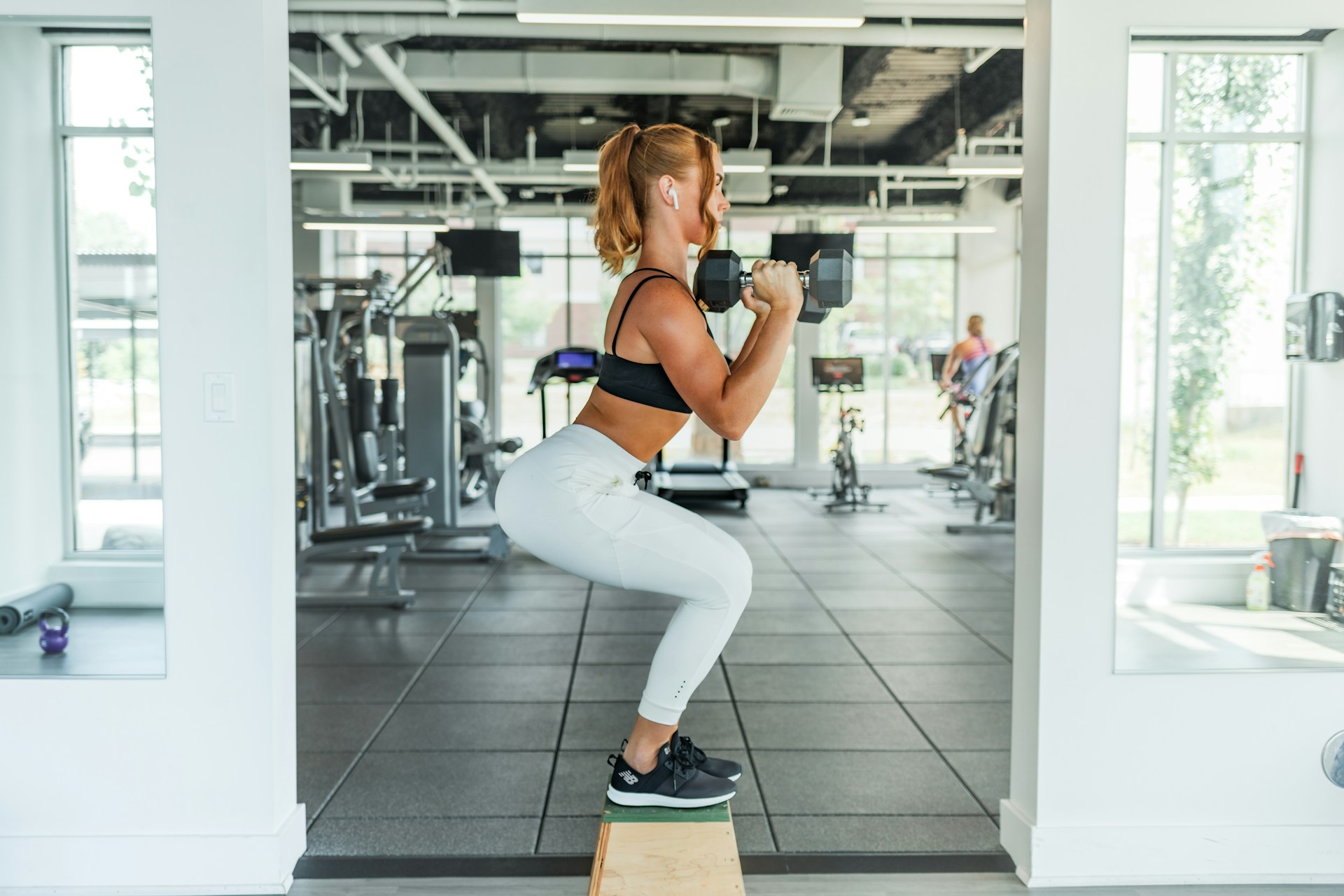
For those applying progressive volume principles with resistance bands rather than free weights, the science translates directly. Our resistance bands vs. free weights guide covers how elastic resistance stacks up when matching the new volume recommendations.
Key Change #3: Frequency — 2–3 Times Per Muscle Group Per Week Is Now the Standard
2009 guidelines: Training each muscle group 1–2 times per week was the standard recommendation for intermediate and advanced lifters.
2026 guidelines: The updated position favors 2–3 training sessions per muscle group per week as the optimal frequency for both strength and hypertrophy. The evidence base is clear: muscle protein synthesis peaks after training and returns to baseline within approximately 48 hours, meaning more frequent stimulation produces more total anabolic signaling over time.
Key evidence: a meta-analysis by Schoenfeld, Ogborn & Krieger (2016, Journal of Sports Medicine) found that training each muscle group twice per week produced significantly greater hypertrophy than once-per-week training, with three times per week showing marginal additional benefit.
Practical implications:
- Traditional one-muscle-per-day splits ("chest Monday, back Tuesday") are now explicitly less optimal than full-body or upper/lower splits trained 3–4 times per week
- The same weekly volume spread across more sessions outperforms concentrated weekly volume for most lifters
- Beginners benefit most from full-body training 3x per week, the highest-frequency approach the guidelines support
Key Change #4: Rest Intervals — Longer Rest Is Better for Hypertrophy
The 2009 guidelines recommended 60–90 second rest intervals for hypertrophy training, based on the hypothesis that metabolic stress (pump, burn, lactate accumulation) was a primary driver of muscle growth. The 2026 guidelines reverse this for moderate-to-heavy training.
New recommendation: 2–3 minutes between working sets for hypertrophy training at moderate-to-heavy loads.
The evidence driving the shift: Schoenfeld et al. (2016, Journal of Strength and Conditioning Research) demonstrated that 3-minute rest periods produced significantly greater strength and hypertrophy gains than 1-minute rest periods, despite producing less metabolic stress. The ability to perform subsequent sets at sufficient intensity — preserving the mechanical tension stimulus — outweighs the metabolic stress benefit of short rest.
Short rest intervals remain appropriate only for lower-load circuits, conditioning work, or when time constraints force load reductions.
Key Change #5: Proximity to Failure Is Now Explicitly Required
Perhaps the most clinically significant change in the 2026 update: the guidelines now explicitly state that training within 0–3 repetitions of muscular failure is necessary to maximize both strength and hypertrophy adaptations. The 2009 guidelines were notably vague on this point.
Research by Lasevicius et al. (2018) and subsequent work by Morton et al. (2019) demonstrated that proximity to failure — regardless of load — is the primary driver of maximal motor unit recruitment, which is the prerequisite for both strength and hypertrophy adaptations. Stopping sets 5 or more reps short of failure consistently underperforms across all load ranges.
This does not mean training to absolute failure on every set, which can increase injury risk and impair session-to-session recovery. It means finishing working sets within 1–3 reps of where technique would break down.
Should Beginners Follow the 80% 1RM Recommendation?
The new guidelines address this directly: for true beginners (first 6–12 months of consistent training), any challenging load produces significant gains because neuromuscular coordination — not mechanical tension — is the primary adaptation driver in early training.
The 80%+ intensity recommendations are specifically for intermediate and advanced lifters who have exhausted beginner adaptations and need higher intensities to continue driving progressive overload. The Mayo Clinic's guidance on strength training for beginners (Mayo Clinic, Strength Training Basics) reinforces starting with loads that allow 12–15 controlled repetitions before increasing weight.
Beginner framework: Start with loads where you can complete 12–15 reps with good form, add reps weekly until you hit 15, then increase load by 5–10%. Our progressive overload guide covers this process in detail.
Applying the 2026 Guidelines: A Practical Summary
| Goal | Intensity (% 1RM) | Weekly Sets per Muscle | Frequency | Rest Between Sets |
|------|-------------------|----------------------|-----------|-------------------|
| Maximal strength | 80–95% | 10–15 | 2–3x | 3–5 min |
| Hypertrophy | 60–80% | 15–20 | 2–3x | 2–3 min |
| Muscular endurance | 40–60% | 15–20 | 2–3x | 30–60 sec |
Joint protection at higher intensities: As training loads move toward the 80%+ range, protecting your joints is a practical priority. For heavy pressing movements — bench press, overhead press, front squats — wrist stability under load becomes critical. The Tribe Lifting Wrist Wraps provide firm, adjustable support for exactly the intensity ranges the new guidelines recommend. For heavy compound pulls at 80%+ 1RM — deadlifts, heavy rows — the Tribe Lifting Lifting Belt supports intra-abdominal pressure that protects the spine under maximal loading.
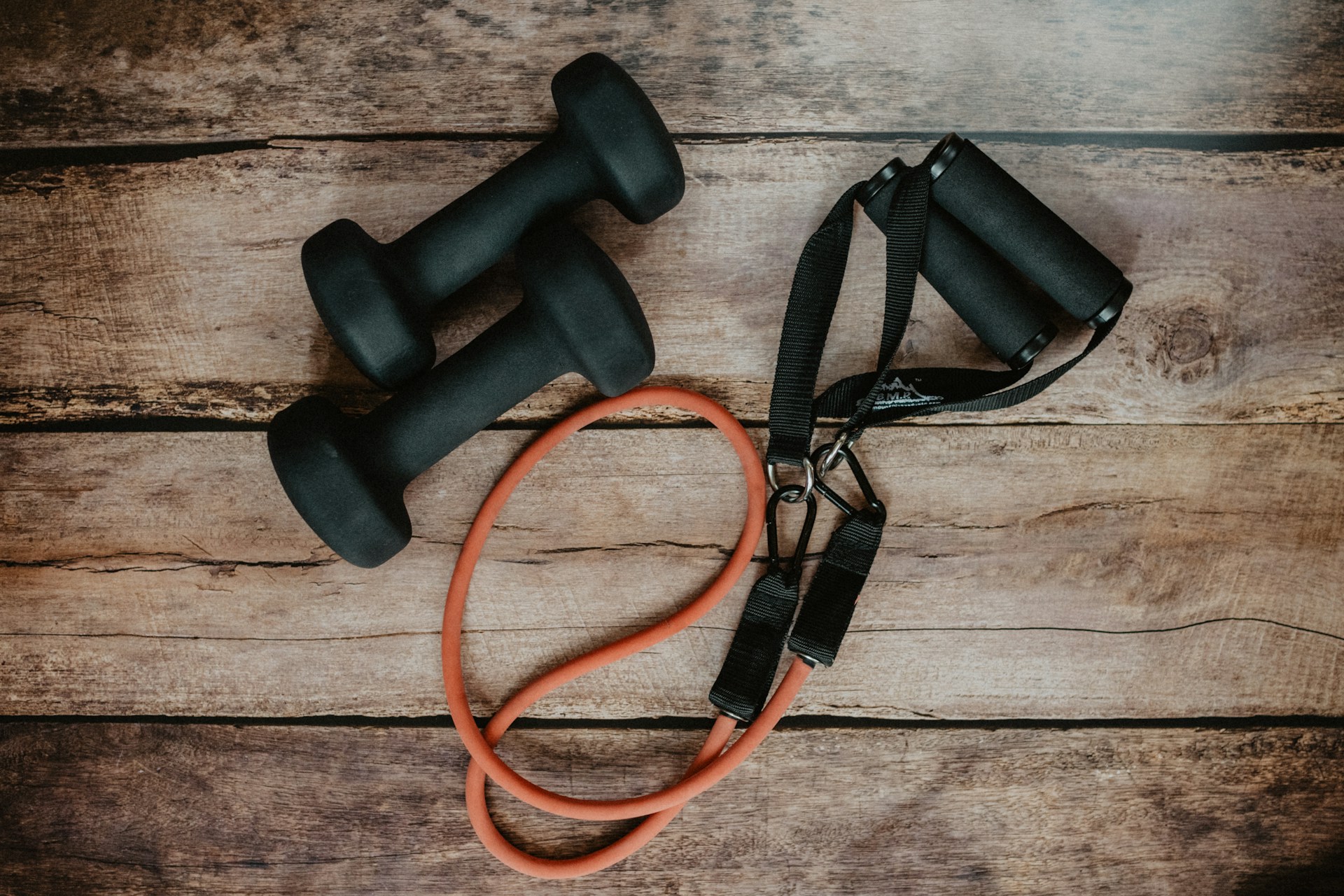
Resistance Bands and the New ACSM Guidelines
The 2026 guidelines are equipment-agnostic — the principles of intensity, volume, frequency, proximity to failure, and rest intervals apply to resistance bands, free weights, cables, and machines equally, provided loads are appropriately challenging.
Resistance bands offer specific practical advantages when applying the new frequency recommendations:
For a resistance band program built around the new ACSM volume and frequency principles, our beginners' resistance band exercises guide provides a structured starting point.
---
FAQ
What are the key changes in the ACSM 2026 resistance training guidelines?
The most significant updates: (1) explicit recommendation to train within 1–3 reps of failure for maximal adaptations; (2) higher weekly volume targets — 15–20 sets per muscle group for intermediate lifters focused on hypertrophy; (3) 2–3 minute rest periods between hypertrophy sets, replacing the old 60–90 second recommendation; and (4) 2–3 times per muscle group weekly as the new frequency standard.
How many sets per week does ACSM now recommend for muscle growth?
The 2026 guidelines recommend 15–20 sets per muscle group per week for intermediate lifters focused on hypertrophy. Beginners can achieve significant gains at 10–15 sets. Advanced lifters with adequate recovery may benefit from 20–25+ sets.
Should beginners train at 80% 1RM based on the new guidelines?
Not immediately. Beginners develop strength primarily through neuromuscular adaptation, which occurs at lower intensities (50–70% 1RM). The 80%+ recommendation targets intermediate and advanced lifters who need higher mechanical tension to continue progressing beyond beginner plateaus.
How often should you train each muscle group per the ACSM 2026 update?
Two to three times per week per muscle group. Research consistently shows distributing volume across multiple sessions outperforms once-per-week muscle group training for both strength and hypertrophy when total weekly volume is matched.
Do the new ACSM guidelines apply to resistance band training?
Yes. The guidelines are equipment-agnostic. The principles of intensity, volume, frequency, and proximity to failure apply equally to elastic band training, provided the load is appropriately challenging relative to your target rep range and goal.
What was wrong with the 2009 ACSM guidelines?
The 2009 guidelines weren't wrong — they reflected the best available evidence at the time. The 2026 update corrects three areas where research has since moved: short rest intervals are no longer recommended for hypertrophy, once-per-week muscle group frequency is no longer considered optimal, and the importance of training close to failure is now explicitly stated rather than implied.


