
Functional Fitness With Resistance Bands: The Science of Everyday Strength
Resistance bands have a reputation problem. Walk into any gym and you'll see them handed to people recovering from shoulder surgery or used for banded warm-up drills before the "real" lifting begins. The assumption is that bands are a stepping stone — something to use until you're ready for the bar.
That assumption is wrong. And the research is increasingly clear about it.
Functional fitness — training that builds strength transferable to real-life movement — is one of the ACSM's top-ranked fitness trends for 2026, with adoption accelerating among both recreational athletes and clinical populations (ACSM Top Fitness Trends, 2026). And resistance band training, it turns out, is one of the most effective tools for building it.
What "Functional Fitness" Actually Means (and Why It Matters)
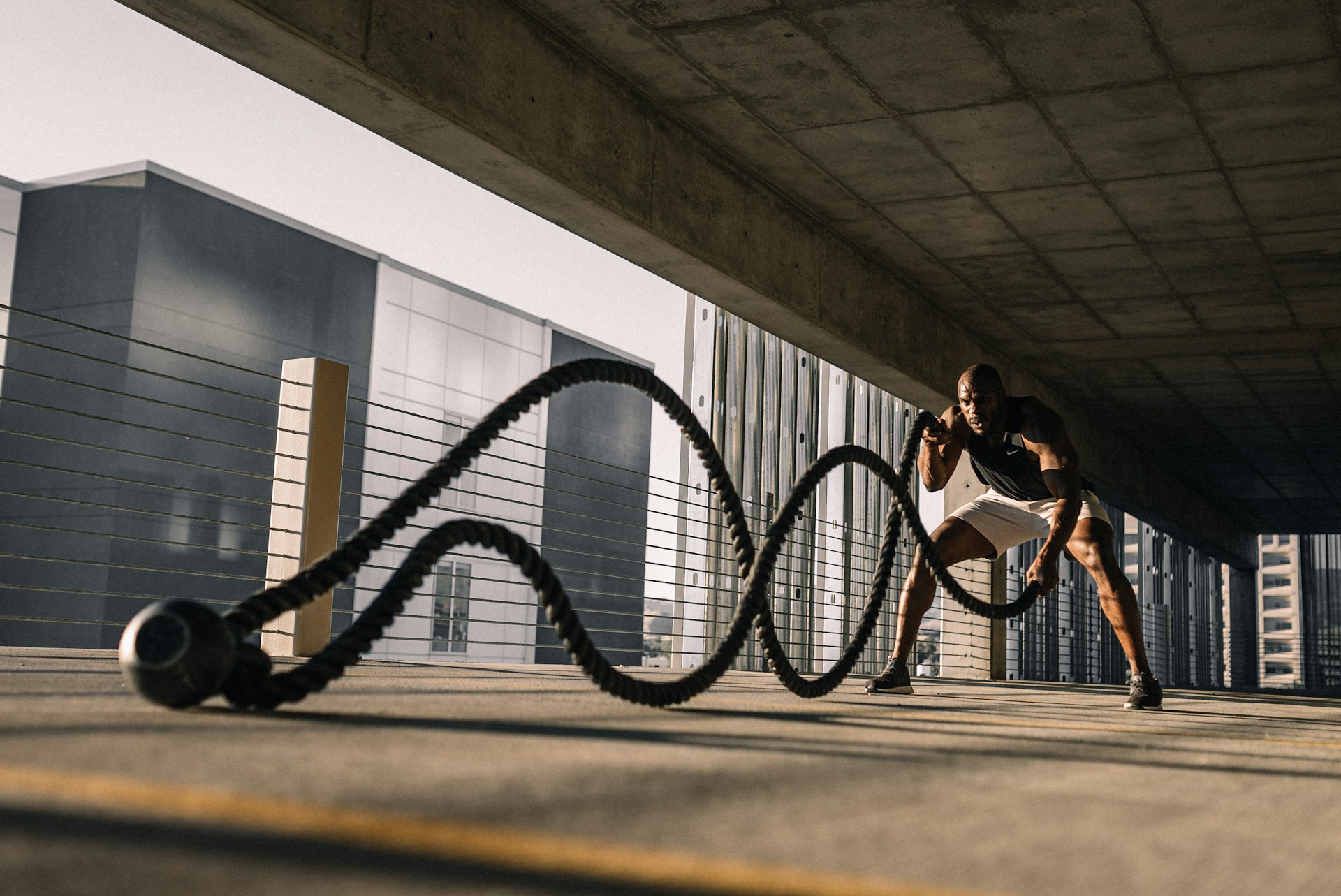
The term gets thrown around loosely, but functional fitness has a specific meaning in exercise science: training the movement patterns your body uses in daily life, sport, and work — not just training individual muscles in isolation.
Think about what your body does when you carry groceries up stairs, catch yourself from a slip, lift a child, or push open a heavy door. These aren't single-muscle actions. They require coordinated force production across multiple joints, demand that your core stabilizes while your limbs generate power, and require your nervous system to respond instantly to unpredictable loads.
Traditional machine-based training targets muscles in isolation along fixed movement paths. Functional training targets movement patterns — the hinge, squat, push, pull, and carry — in ways that train the nervous system alongside the muscles.
A 2014 systematic review in the Journal of Aging and Physical Activity found that functional resistance training programs produced significantly greater improvements in mobility, balance, and daily-task performance compared to machine-based programs, even when total training volume was equated (Liu & Latham, 2014). The mechanism: free-form movement trains proprioception and inter-muscular coordination, not just contractile strength.
Why Resistance Bands Are Functionally Superior to Fixed-Weight Equipment
Here's where bands become genuinely interesting from a biomechanics standpoint.
Variable Resistance Matches Natural Strength Curves
Your muscles don't produce equal force throughout a movement. In a squat, you're strongest near the top; at the bottom, you're in a disadvantaged mechanical position. Free weights present a constant load — the barbell weighs the same at the bottom as the top. Bands don't.
As you move through a banded squat, the band stretches further, increasing resistance as you approach your strongest position. This phenomenon — called accommodating resistance — is the same technique elite powerlifters use with band-and-barbell combinations to develop explosive strength at lockout.
Research published in the Journal of Strength and Conditioning Research confirmed that combined free weight plus elastic resistance training produced greater gains in peak power compared to free weights alone — because the accommodating resistance forced maximal effort through the full range of motion (Bellar et al., 2011).
Resistance From Any Angle
A barbell only resists in one direction: down. Cables improve on this but require a machine. Bands offer resistance in any direction you stretch them — horizontal, diagonal, rotational — with no equipment beyond an anchor point.
This matters enormously for functional movement. Most real-life strength challenges are lateral, rotational, or diagonal. A band anchored to a door allows you to train anti-rotation, pulling across the body, pressing at diagonal angles, and resisting lateral forces — all patterns that free weights train poorly or not at all.
No Momentum Cheating
With heavy barbells and dumbbells, it's possible to use momentum to power through sticking points. Bands don't allow this: if you let momentum carry the movement, the band goes slack and provides no resistance. Every repetition must be controlled through the full range.
This turns band training into what researchers call time under tension training by default — the muscles are loaded continuously without the passive phases that occur when free weights are reversed at the bottom of a movement.
Can Resistance Bands Build Real Strength?
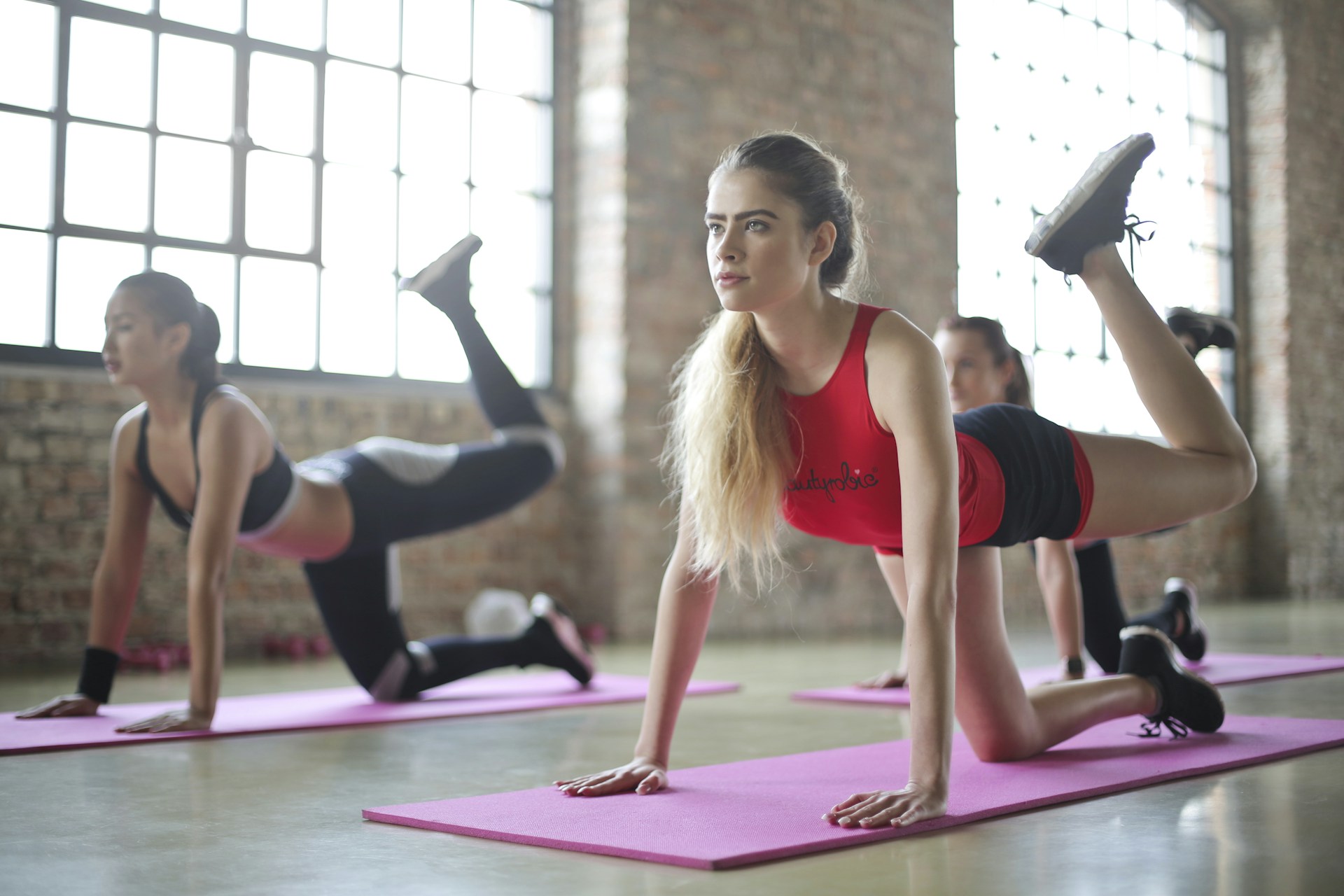
The skeptic's objection is that bands can't generate enough resistance to produce meaningful strength gains — that you'll plateau quickly without access to progressive overload.
The research doesn't support this.
A 2019 meta-analysis in SAGE Open Medicine reviewed 19 studies examining elastic resistance training across populations ranging from sedentary adults to competitive athletes. The analysis found that elastic resistance training produced comparable gains in muscle strength and muscle mass to free weight and machine training, with the strength of evidence rated as moderate-to-strong (Lopes et al., 2019).
The mechanism of hypertrophy is mechanical tension and metabolic stress — and bands produce both. The key variable isn't whether you're using bands or barbells; it's whether you're applying sufficient progressive overload over time.
Progressive overload with bands works differently but is equally achievable:
- Move to a heavier band as a given resistance level becomes too easy
- Change your body position relative to the anchor point (moving further away increases tension)
- Slow the tempo to increase time under tension without changing band resistance
- Add band resistance to bodyweight movements (banded push-ups, pull-ups, squats)
For full progressive overload capacity, a multi-resistance band set is essential. The Tribe Lifting resistance band set provides five resistance levels from light to heavy, with handles, a door anchor, and ankle straps — giving you the full range needed to systematically progress every major movement pattern.
The 6 Functional Movement Patterns and Which Band Exercises Cover Them
Exercise scientists generally categorize all human movement into six fundamental patterns. A well-designed functional training program covers all six. Here's how resistance bands map to each:
1. Hinge (Hip-Dominant Pull)
What it trains: Glutes, hamstrings, lower back — the posterior chain that controls bending, lifting from the floor, and decelerating.
Band exercise: Standing banded good morning, banded deadlift (band under feet), resistance band pull-through.
Why it matters: The hip hinge is the fundamental movement pattern for picking things up safely. Weakness here is the leading mechanical contributor to lower back injury.
2. Squat (Knee-Dominant Push)
What it trains: Quads, glutes, adductors — lower body force production for getting up from the floor, climbing stairs, sitting to standing.
Band exercise: Banded squat (band under feet, held at shoulders), lateral banded walks, banded step-ups.
For lower body resistance band work targeting glutes and quads, the Tribe Lifting fabric resistance bands are particularly well-suited — the fabric construction prevents rolling during squatting movements and provides even compression around the thigh.
3. Push (Horizontal and Vertical)
What it trains: Pecs, anterior deltoids, triceps — upper body pushing for pressing doors open, pushing obstacles, and overhead reaching.
Band exercise: Banded push-up (band across upper back for added resistance), standing chest press (band anchored behind), banded overhead press.
4. Pull (Horizontal and Vertical)
What it trains: Lats, rhomboids, rear deltoids, biceps — pulling, rowing, and any movement that draws load toward the body.
Band exercise: Banded row (anchored at chest height), face pulls (anchored at head height), lat pulldown (band overhead).
The pull pattern is typically the most undertrained in non-gym populations. Banded rows and face pulls require only a door anchor and take less than 10 minutes to train effectively.
5. Carry (Anti-Movement Stability)
What it trains: Core stabilizers — the muscles that resist movement while your limbs generate force, essential for carrying loads, walking with weight, and any asymmetric activity.
Band exercise: Pallof press (anti-rotation), suitcase carry with banded resistance, single-arm banded row (trains anti-lateral flexion).
6. Rotate (Rotational Power)
What it trains: Obliques, thoracic spine rotators — the movement that underlies swinging, throwing, getting up from the floor, and any change-of-direction activity.
Band exercise: Banded woodchop, banded diagonal chop (low to high), standing rotation press.
Bands are the most effective tool for rotational training — no other piece of equipment creates clean rotational resistance from all planes without expensive cable machines.
A Sample Functional Band Training Session (45 Minutes)
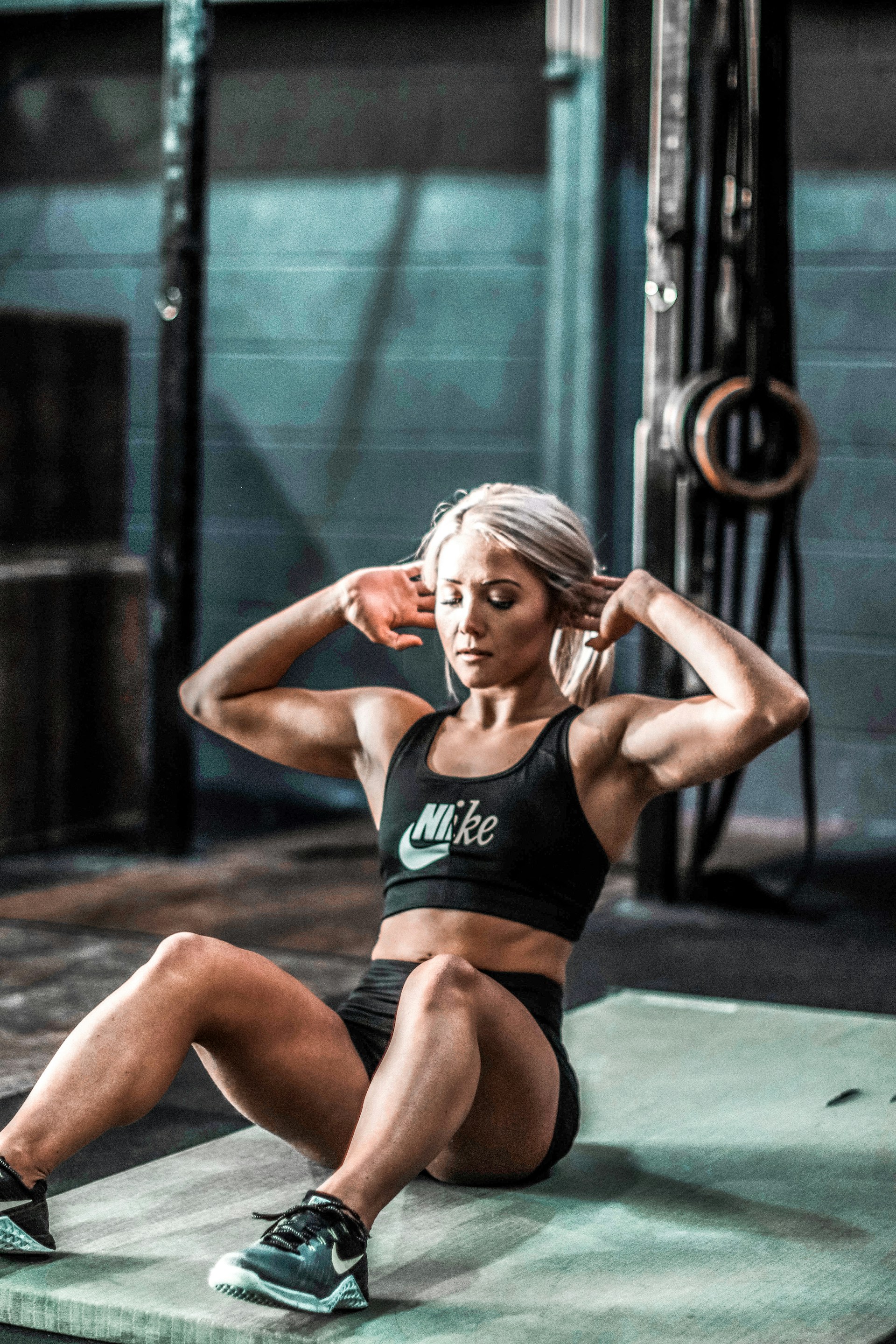
This session covers all six fundamental patterns, requires only a band set and door anchor, and can be completed anywhere.
Warm-up (5 minutes)
- 10 band pull-aparts
- 10 banded hip circles (each leg)
- 10 banded good mornings
Main Work — Superset Format (3 rounds each pair)
Pair A: Hinge + Push
- Banded pull-through: 12 reps
- Banded chest press: 12 reps
- Rest 60 seconds
Pair B: Squat + Pull
- Banded squat: 15 reps
- Banded row: 12 reps per side
- Rest 60 seconds
Pair C: Carry + Rotate
- Pallof press: 10 reps each side, 3-second hold
- Banded woodchop: 12 reps each side
- Rest 60 seconds
Finisher
- Banded face pulls: 20 reps (2 sets)
Total time: approximately 40–45 minutes. Every fundamental movement pattern trained. No gym required.
Resistance Bands vs Free Weights: Which Should You Choose?
The honest answer is that this is the wrong question. The more useful question is: what does your current training lack?
Choose bands as your primary tool if:
- You train at home or travel frequently
- You're returning from injury and need to relearn movement patterns under sub-maximal load
- Your training is heavy on sagittal-plane work (squats, deadlifts, bench) and needs more rotational and lateral stimulus
- You want to reduce joint stress while maintaining training volume
Add bands to existing free weight training if:
- You want to add accommodating resistance to compound lifts
- You need to train movement patterns that barbell work doesn't cover
- You're looking for effective finishers and accessory work
Rely primarily on free weights if:
- Maximum strength development is your primary goal
- You have access to a full gym and benefit from the social environment
- Absolute load tracking is important to your programming
For most people training for health, longevity, and real-world function — the ACSM's stated goals for functional fitness — resistance bands cover 80–90% of training needs with a fraction of the cost, space, and equipment complexity of a free weight setup.
As detailed in our resistance bands vs free weights comparison, the gap between the two modalities is smaller than most gym-goers assume — and bands win on several metrics that matter in real training environments.
Building Your Band-Based Functional Training Program
Effective functional band programming follows the same principles as any well-designed resistance training plan:
Frequency: 3–4 sessions per week, allowing 48 hours of recovery between sessions targeting the same movement patterns.
Progression: Advance to heavier resistance when you can complete all prescribed reps with clean form and full range of motion. Aim for one progression every 2–3 weeks when training consistently.
Balance: Ensure your pull volume matches or exceeds your push volume. Most people train pushing movements more naturally; deliberate pull work prevents shoulder imbalances.
Recovery: Bands reduce compressive joint stress compared to free weights, but the muscles still require adequate recovery. Don't skip rest days because sessions feel easier — the adaptation happens during recovery.
For a structured program integrating resistance band work with other modalities, our home gym resistance bands guide provides a full 8-week progression framework. And if recovery is a limiting factor in your training, our active recovery routine covers how to schedule and structure lower-intensity days effectively.
---
FAQ
What makes resistance band training "functional" compared to machine training?
Functional training trains movement patterns rather than isolated muscles, requiring coordination across multiple joints and engagement of stabilizing muscles. Bands — unlike fixed machines — allow movement in any plane, demand stability through the full range of motion, and build strength alongside the neuromuscular coordination that transfers to real-life tasks.
Can you build visible muscle with resistance bands alone?
Yes. The 2019 meta-analysis in SAGE Open Medicine found elastic resistance training produced comparable hypertrophy to free weights across multiple studies. The requirements are the same: sufficient mechanical tension, progressive overload over time, and adequate protein intake. Bands provide all three when used correctly.
How many resistance bands do you need for a complete functional training program?
A minimum of three resistance levels (light, medium, heavy) covers most functional training needs. A set of five covers the full spectrum from mobility work to strength training. For most people, a complete set like the Tribe Lifting resistance band set with a door anchor handles every movement pattern across all intensity levels.
Is resistance band training safe for people with joint problems?
Generally, yes — and it's often preferred in rehabilitation settings precisely because elastic resistance creates less compressive joint force than free weights. A 2015 study in Physical Therapy in Sport found banded exercises produced comparable muscle activation to dumbbell exercises with significantly lower shoulder joint load (Andersen et al., 2015). Anyone with specific joint conditions should consult a physiotherapist for individualized guidance.
How long before you see results from functional band training?
Neurological adaptations — improved coordination, balance, and movement efficiency — typically emerge within 2–4 weeks. Visible strength and hypertrophy require consistent training over 6–12 weeks. Most people notice significant improvements in everyday movement quality (carrying groceries, climbing stairs, getting up from the floor) within the first month.
What's the best band exercise for lower back pain prevention?
The banded pull-through and standing banded good morning are the most targeted hip hinge exercises for building posterior chain strength, which is the primary mechanical safeguard against lower back injury. The Pallof press is the best anti-rotation exercise for building the deep core stability that protects the lumbar spine. Both require only a band and door anchor.


