
How to Improve Your Bridge: A Complete Mobility Progression Guide
The bridge — also called the wheel pose in yoga (Urdhva Dhanurasana) or the gymnastic back bridge — is one of the most revealing tests of total-body mobility. If you can hold a clean, straight-arm bridge with your hips high and arms fully extended, your shoulders, thoracic spine, hip flexors, and wrists are all working as they should.
If you can't? You've just identified exactly where your body is restricted.
This guide breaks down a systematic progression to take you from barely lifting off the floor to a full, confident bridge — no coach required.
Why the Bridge Matters Beyond Flexibility
The bridge is not just a flexibility party trick. Research published in the Journal of Strength and Conditioning Research demonstrates that spinal extension exercises — the movement family the bridge belongs to — significantly improve thoracic mobility, shoulder range of motion, and posterior chain activation (Briggs et al., 2019).
The bridge simultaneously requires:
- Shoulder flexion (180° overhead range)
- Thoracic extension (upper back bending backward)
- Hip extension (hip flexors lengthening fully)
- Wrist extension (hands bearing load at 90°)
- Glute and hamstring activation (to drive hips upward)
No single stretch addresses all of these. That's why isolated stretching rarely fixes a bad bridge — you need a progression that builds each component simultaneously.
The Bridge Assessment: Where Are You Stuck?
Before diving into drills, identify your limiting factor. Lie on your back with hands by your ears (fingers pointing toward shoulders) and attempt to push up.
Scenario 1: You can't straighten your arms
→ Your limitation is shoulder flexion and/or thoracic extension. Focus on wall slides and puppy pose progressions below.
Scenario 2: Your hips sag toward the floor
→ Your hip flexors are tight and/or glutes are weak. Prioritize banded hip flexor stretches and glute bridge progressions.
Scenario 3: Your wrists hurt
→ Wrist extension mobility is the bottleneck. Start with daily wrist CARs and loaded wrist stretches.
Scenario 4: You can push up but it looks rounded
→ Your thoracic spine needs more extension range. Wall walks and thoracic foam rolling are your priority.
Most people have limitations in more than one area. That's normal — and exactly why a systematic approach works better than random stretching.
Phase 1: Build the Foundation (Weeks 1-3)
These drills target each component of the bridge individually. Do them daily — 10-15 minutes total.
Drill 1: Wall Slides for Shoulder Flexion
Stand with your back flat against a wall. Place your arms in a "goalpost" position (elbows at 90°, upper arms parallel to the floor, backs of hands touching the wall). Slowly slide your hands upward while keeping your lower back, elbows, and hands in contact with the wall.
- Sets/Reps: 3 × 10 reps
- Key cue: The moment any contact point leaves the wall, that's your current end range. Work within it.
According to a 2020 study in the International Journal of Sports Physical Therapy, wall slides activate the lower trapezius and serratus anterior more effectively than traditional shoulder stretches, making them superior for building overhead mobility (Huang et al., 2020).
Drill 2: Puppy Pose (Extended Puppy Stretch)
Start on all fours. Walk your hands forward while keeping your hips stacked directly over your knees. Let your chest melt toward the floor. Hold for 45-60 seconds.
- Sets: 3 holds of 45-60 seconds
- Progression: Place hands on yoga blocks to deepen the stretch; add gentle side-to-side rocking
This is the single most effective drill for combined thoracic extension and shoulder flexion. Online flexibility communities consistently rank it as the top bridge-building drill — and the research backs it up.
Drill 3: Wrist CARs (Controlled Articular Rotations)
Extend your arm in front of you and slowly rotate your wrist through its full range of motion — flexion, extension, radial deviation, ulnar deviation — in a smooth circle. Spend 30 seconds per direction per wrist.
- Sets: 2 × 30 seconds per direction per wrist
- When: Before any wrist-bearing exercise and first thing in the morning
Drill 4: Glute Bridge with Band
Lie on your back with a fabric resistance band around your thighs just above the knees. Feet flat, hip-width apart. Drive through your heels, squeeze glutes at the top, and push out against the band. Hold the top position for 3 seconds.
- Sets/Reps: 3 × 15 with 3-second holds
- Why the band matters: Pushing against the band activates the gluteus medius, which stabilizes your pelvis during the bridge. Weak glute med is a hidden reason many bridges look asymmetrical.
Drill 5: Couch Stretch for Hip Flexors
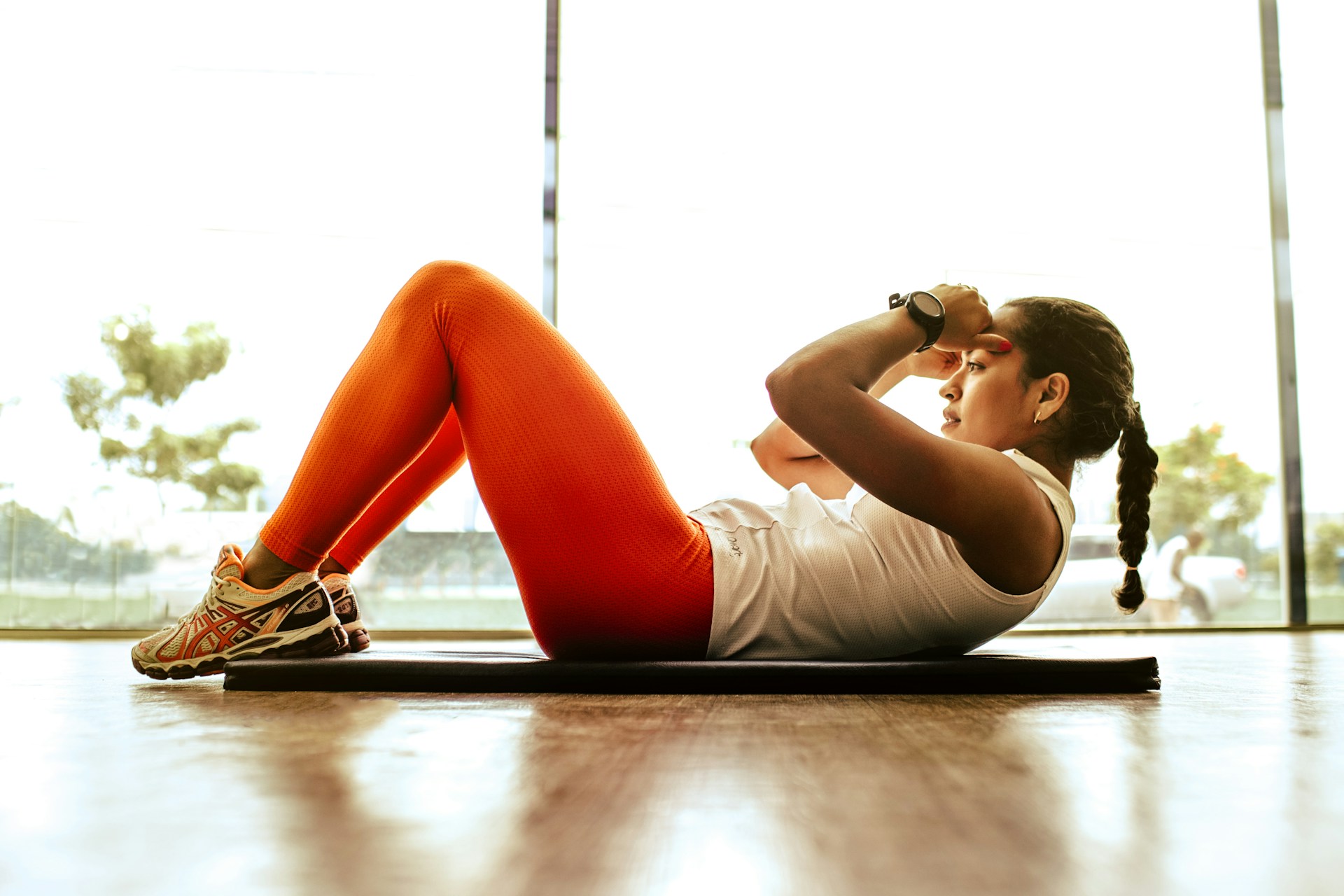
Place one knee on the floor with your shin running up a wall (or the front of a couch). The other foot is flat on the floor in front of you in a lunge position. Squeeze the back glute and hold. You should feel an intense stretch in the hip flexor of the back leg.
- Sets: 2 × 45 seconds per side
- Key cue: If your lower back arches excessively, you're compensating. Tuck your pelvis slightly and re-engage your glute.
Phase 2: Integrated Progressions (Weeks 4-6)
Now you combine the components into bridge-specific patterns.
Drill 6: Wall Walks (Down)
Stand facing away from a wall, about two feet away. Place your hands on the wall behind you (overhead) and slowly walk them down the wall, bending backward. Go only as far as you can control. Walk back up.
- Sets/Reps: 3 × 5 down-and-ups
- Progression: Start closer to the wall each week
- Safety: Always have a clear floor behind you. If you feel dizzy, stop — backward bending can temporarily affect blood pressure in beginners.
Drill 7: Elevated Bridge (Hands on Blocks)
Place two yoga blocks or a sturdy bench behind your head. Set up as for a regular bridge (hands by ears, fingers pointing toward shoulders) but place your hands on the elevated surface. This reduces the range of motion required and lets you practice the pushing pattern.
- Sets/Reps: 3 × 5 holds of 10-15 seconds
- Progression: Decrease block height every 1-2 weeks as your range improves
Drill 8: Banded Shoulder Dislocates
Hold a resistance band with a wide grip in front of you. Keeping your arms straight, slowly bring the band overhead and behind your back, then reverse. The band provides gentle resistance through the range, building active shoulder flexibility.
- Sets/Reps: 3 × 10
- Key cue: Grip width determines difficulty — wider is easier. Only go as narrow as you can while keeping arms straight.
Phase 3: The Full Bridge (Weeks 7-10)
Drill 9: Floor Bridge Attempts
With all the prerequisite mobility and strength built, attempt the full bridge from the floor. Key technical points:
- Sets: 5 attempts, rest 60 seconds between
- Target: 15-second holds with steady breathing
Drill 10: Bridge Push-Ups (Reps)
Once you can hold the bridge for 15+ seconds, start lowering down and pushing back up. This builds the dynamic strength to enter and exit the bridge confidently.
- Sets/Reps: 3 × 3-5 reps
- Progression: Add a 5-second hold at the top of each rep
How Long Does It Take to Get a Straight-Arm Bridge?
Timeline depends entirely on your starting point:
| Starting Level | Expected Timeline |
|---------------|------------------|
| Can do a glute bridge only | 8-12 weeks |
| Can push up but arms are bent | 4-6 weeks |
| Have bridge but it's "ugly" | 2-4 weeks |
| Returning after time off | 3-5 weeks |
A 2021 systematic review in Sports Medicine found that flexibility interventions lasting at least 6 weeks with 5+ sessions per week produced the most significant range-of-motion gains (Thomas et al., 2018). The key is daily consistency, not marathon sessions.
Common Bridge Mistakes and Fixes
Mistake 1: Pushing through fingertips instead of full palm
→ This overloads the wrists and reduces pushing power. Spread fingers wide, press through the entire hand.
Mistake 2: Feet too far from hips
→ Brings more hamstring, less glute. Walk feet closer until shins are nearly vertical at the top.
Mistake 3: Knees splaying outward
→ Usually a sign of tight adductors or weak glute medius. Use a band around the knees for tactile feedback — push out slightly against it to maintain alignment.
Mistake 4: Only training flexibility, never strength
→ Passive range without active control is useless in the bridge. Every drill above includes an active component for a reason. Research from the Scandinavian Journal of Medicine & Science in Sports confirms that active flexibility training produces more functional range of motion than passive stretching alone.
Programming: The 10-Minute Daily Bridge Routine
| Drill | Sets × Reps/Duration | Phase |
|-------|----------------------|-------|
| Wrist CARs | 2 × 30s per direction | All |
| Wall Slides | 3 × 10 | 1-2 |
| Puppy Pose | 3 × 45s | 1-2 |
| Banded Glute Bridge | 3 × 15 | All |
| Couch Stretch | 2 × 45s/side | 1-2 |
| Wall Walks | 3 × 5 | 2-3 |
| Elevated Bridge | 3 × 15s holds | 2 |
| Full Bridge | 5 × 15s holds | 3 |
Do Phase 1 drills for weeks 1-3, then layer in Phase 2 and 3 as you progress. The banded glute bridge and wrist CARs stay in the rotation permanently — they maintain the foundation.
For the banded drills in this routine, Tribe Lifting's 5-pack fabric resistance bands (4.7★, 10,000+ reviews) provide the right resistance levels for both glute activation and knee-tracking feedback. The non-slip fabric design stays in place during bridge work better than latex alternatives.
Related Reading
- Morning Mobility Routine for Tight Hips and Lower Back
- Resistance Bands vs Free Weights for Muscle Building
- Resistance Band Exercises to Fix Desk Posture
FAQ
Can you improve bridge flexibility without a coach?
Absolutely. The progression above is designed for self-guided practice. The key is using objective markers — can you touch the wall on wall slides? Can you hold an elevated bridge for 15 seconds? — rather than subjective feelings. Film yourself weekly to track progress.
What drills improve upper back flexibility for bridges?
Puppy pose and wall walks are the two most effective drills for thoracic extension. Foam rolling the thoracic spine (not the lower back) before bridge practice also helps by temporarily increasing extension range by 3-5 degrees, according to research in the Journal of Athletic Training.
How often should I practice bridge progressions?
Daily, for 10-15 minutes. Flexibility adaptations require high frequency. A 2018 meta-analysis in Sports Medicine found that 5+ sessions per week produced significantly better results than 2-3 sessions per week for range-of-motion improvements.
Is the bridge safe for people with lower back pain?
It depends on the cause. For people with flexion-intolerant back pain (pain from sitting and bending forward), bridges can actually help by strengthening extensors. However, if you have extension-intolerant conditions like spondylolisthesis or facet joint issues, bridge progressions should be supervised by a physical therapist. When in doubt, start with glute bridges only and consult a professional before progressing to full back bridges.
Should I warm up before bridge practice?
Yes. Five minutes of light movement (walking, arm circles, cat-cow stretches) increases tissue temperature and blood flow, making the drills more effective and safer. The wrist CARs and wall slides in Phase 1 serve as both warm-up and targeted mobility work.


