
Simple Home Gym Setup: The Short Answer
A simple home gym setup does not need to look like a commercial gym. It needs to make the next workout easy to start. For most people, the best first setup is a mat, a few resistance bands, adjustable dumbbells or one pair of moderate dumbbells, a sturdy bench or box, and a pull-up or suspension option if your space allows it.
The goal is coverage, not clutter. Your home gym should let you squat, hinge, push, pull, carry, brace, and move through basic mobility work. If it can do those things in 20 to 45 minutes without setup drama, it is good enough to build strength, maintain mobility, and return from time away without feeling lost.
The biggest mistake is buying equipment for the version of yourself who trains perfectly. Build for the version of yourself who is tired, short on time, and deciding whether to skip. A simple setup that stays visible and ready will beat a complicated setup buried in a closet.

What Equipment Gives Beginners the Most Complete Home Workout?
Start with tools that solve multiple jobs. The American College of Sports Medicine recommends resistance training that challenges major muscle groups and can be progressed over time (ACSM physical activity resources). At home, that does not require machines. It requires enough resistance, enough exercise variety, and a plan you can repeat.
The highest-value starter kit is:
- Exercise mat for floor work, mobility, and core training
- Long resistance bands or tube bands for rows, presses, hinges, pulldowns, and assisted mobility
- Mini bands for glute work, warm-ups, and hip control
- One or two dumbbells for goblet squats, split squats, presses, rows, carries, and Romanian deadlifts
- Adjustable bench, flat bench, step, or sturdy box
- Door anchor, pull-up bar, rings, or suspension trainer if your door frame or ceiling setup is safe
If you can only buy one category first, choose resistance bands. They are inexpensive, portable, joint-friendly, and useful for both strength and mobility. The Tribe Lifting resistance band set is a practical full-body option because the handles and door anchor make home rows, presses, Pallof presses, curls, triceps extensions, and assisted lower-body work easier to set up. For lower-body activation, the Tribe Lifting fabric resistance bands are better for glute bridges, lateral walks, and warm-ups because they are less likely to roll or pinch than thin mini loops.
Dumbbells come next. A single moderate dumbbell can train goblet squats, split squats, rows, floor presses, suitcase carries, and hinge patterns. Adjustable dumbbells save space, but fixed dumbbells are fine if budget is tight. Buy the weight that lets you train cleanly today, then add load later.
How to Cover Strength, Mobility, and Conditioning in a Small Space
A useful home gym is not about square footage. It is about clear movement lanes. Most people need a rectangle about the size of a yoga mat plus enough room to extend arms overhead and step backward into a lunge. If you have that, you can train.
Use this movement checklist before buying more equipment:
- Squat: goblet squat, box squat, banded squat
- Hinge: Romanian deadlift, band pull-through, hip bridge
- Push: push-up, dumbbell floor press, band chest press
- Pull: band row, one-arm dumbbell row, pull-up progression
- Lunge: reverse lunge, split squat, step-up
- Core: dead bug, plank, Pallof press, loaded carry
- Mobility: 90-90 hip switches, thoracic rotations, ankle rocks, shoulder wall slides
That list covers more than most people need for the first year of home training. The CDC recommends adults combine aerobic activity with muscle-strengthening work on at least two days per week (CDC adult activity guidance). Your home gym should make that easy by letting you move from strength work into low-impact conditioning without rearranging the room.
For conditioning, do not overcomplicate it. Walk outside, use a jump rope if your joints and flooring tolerate it, do step-ups, march intervals, loaded carries, or simple circuits. If you live in an apartment, choose quiet options: step-ups, shadow boxing, marching, band circuits, and carries.
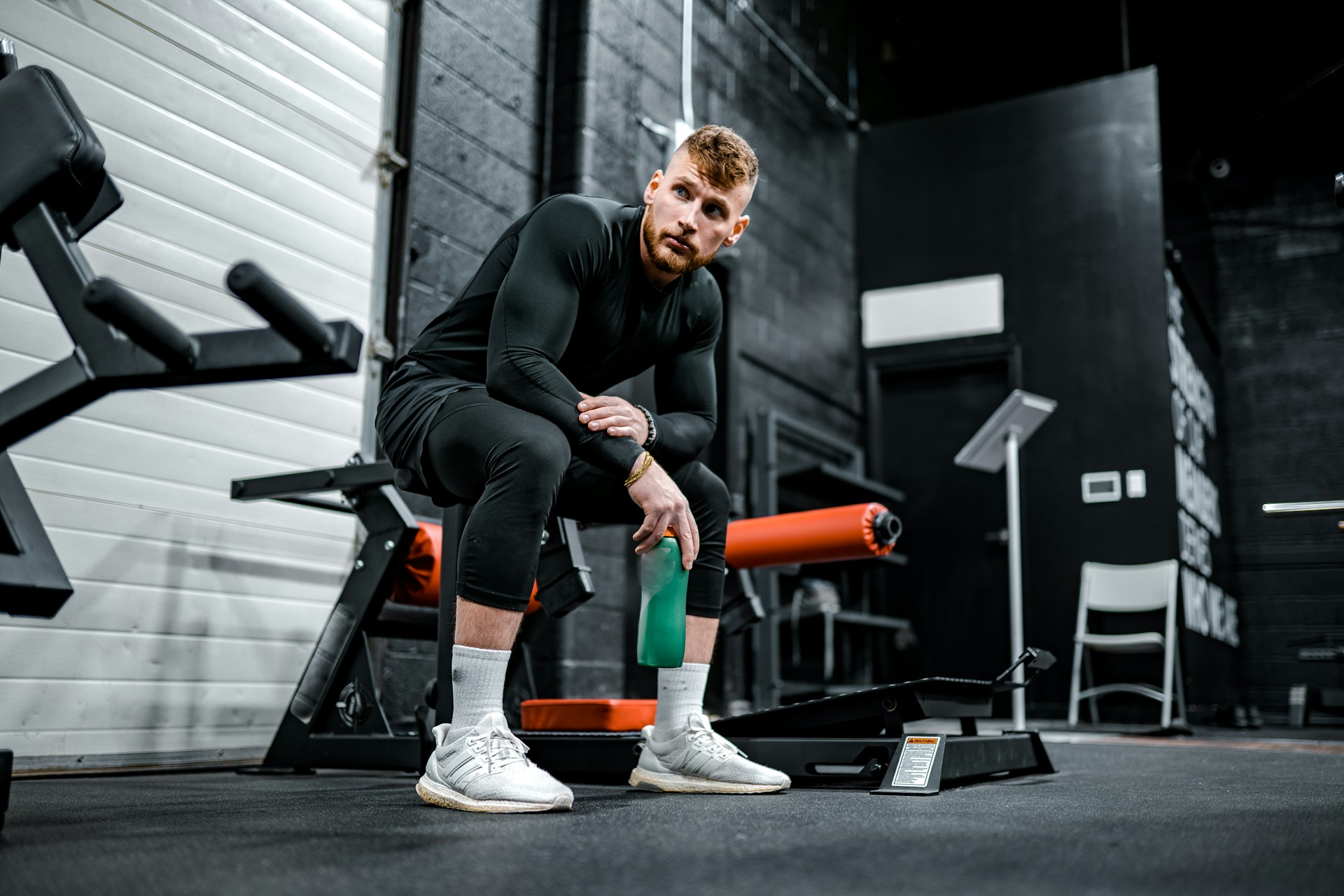
The Simple Home Gym Layout That Makes Training Easier
Put the equipment where the habit happens. If your bands are in a bag under the bed, they are not really part of your routine. Keep the mat rolled in sight, hang bands on a hook, place dumbbells near the wall, and leave a small open training lane.
A clean layout has three zones:
Avoid turning the room into a warehouse. If setup takes 10 minutes, the routine will fade. The best home gym feels slightly too simple because everything you own gets used.
Safety matters too. Check door anchors before every session. Do not attach bands to loose furniture, weak hinges, glass doors, or anything that can move toward you under tension. If you add a pull-up bar, follow the manufacturer's installation instructions and test it conservatively. Mayo Clinic notes that exercise programs should match current ability and medical status, especially after injury or time away (Mayo Clinic fitness basics). That applies to equipment choices as much as workout choices.
A 3-Day Beginner Home Gym Plan
Use this plan for four to six weeks. Train on nonconsecutive days when possible. Keep two or three reps in reserve on most sets. The first goal is consistency and clean movement, not exhaustion.
Day 1: Full-Body Strength
Warm up for five minutes with easy marching, hip hinges, arm circles, and bodyweight squats.
Do three rounds:
Finish with five minutes of walking or easy step-ups.
Day 2: Mobility and Control
Do two or three easy rounds:
This day should leave you feeling better, not drained. For more structure, use our mobility practice for beginners or the active recovery mobility routine.
Day 3: Strength and Conditioning
Do three rounds:
Then do six to ten minutes of easy intervals: 30 seconds of step-ups or brisk marching, then 30 seconds easy. Keep it repeatable.
How to Keep a Home Gym Routine Consistent
Consistency is mostly an environment problem. Your setup should reduce decisions. Pick the same three training days each week. Keep the first exercise easy to start. Track only the basics: exercise, sets, reps, and how hard the session felt.
Use a minimum workout rule. On low-energy days, do one round of the planned circuit. If you still feel bad after the first round, stop. Most of the time, starting is enough to finish. When it is not, you still kept the habit alive.
Progress slowly. Add reps before adding load. Add a set before buying new equipment. Add harder variations only when your current version feels controlled. The National Institute on Aging emphasizes that strength, balance, flexibility, and endurance all matter for long-term function (NIA exercise and physical activity). A home gym routine that includes all four is easier to sustain than a plan built only around hard strength days.
If you are returning after injury, illness, or months away, lower the first two weeks on purpose. Use bands, bodyweight, and moderate dumbbells. Avoid testing maxes. Read our active recovery workout guide if soreness or fear of overdoing it is the reason you keep stopping.
What to Buy Later
After six to eight consistent weeks, upgrade based on the exercises that are actually limiting you.
Buy heavier dumbbells if squats, hinges, rows, and carries are too easy. Buy a bench if floor pressing and step-ups feel cramped. Buy rings or a pull-up bar if pulling strength is the missing piece. Buy a stronger band if your rows, presses, and hinges no longer feel challenging.
Do not buy equipment to create motivation. Buy equipment to remove a real bottleneck in a routine that already exists.
FAQ
What is the best simple home gym setup for beginners?
The best simple home gym setup is a mat, resistance bands, one or two dumbbells, a bench or sturdy box, and a safe pulling option such as a door anchor, suspension trainer, rings, or pull-up bar. This covers strength, mobility, and conditioning without taking much space.
Can resistance bands replace a full home gym?
Resistance bands can cover a large part of a home gym routine, especially for beginners and people training in small spaces. For long-term strength, many people eventually add dumbbells, a bench, or a pull-up option so load and exercise variety keep progressing.
How much space do I need for a home gym?
Most beginners need enough space for a mat, overhead reach, and one or two steps in each direction. A spare bedroom, garage corner, living room, or 10x12 room can work if equipment is stored simply and the training lane stays clear.
How many days per week should I use a home gym?
Start with three days per week: two full-body strength sessions and one mobility or lighter conditioning session. Add more only when recovery, schedule, and motivation are stable.
What should I avoid buying first?
Avoid large single-purpose machines, heavy racks, and bulky cardio equipment until you have trained consistently for several weeks. Start with versatile tools first, then upgrade when your current setup creates a real limit.


