
15-Minute Standing Resistance Band Core Workout (No Crunches Required)
If you hate lying on the floor to train your abs, you're not alone — and you're not wrong. Standing core exercises with resistance bands build functional strength that transfers directly to real life, and research shows they activate deep stabilizers that crunches completely miss.
This 15-minute workout hits your entire core — obliques, transverse abdominis, rectus abdominis, and lower back — without a single crunch or sit-up. All you need is a resistance band and something to anchor it to.
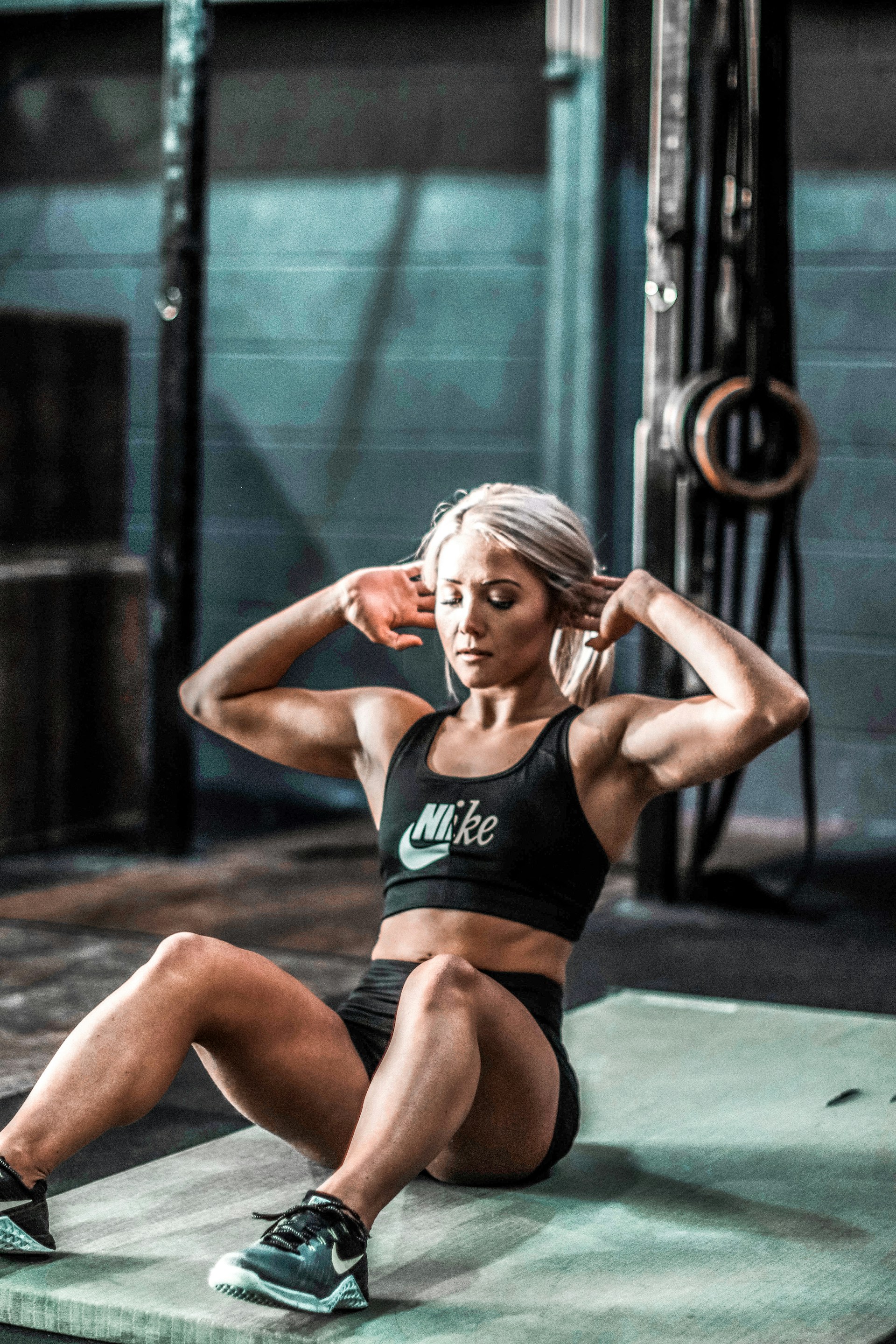
Why Standing Core Work Beats Crunches
The core's primary job isn't flexing your spine forward (what crunches do). It's resisting movement — bracing against rotation, lateral flexion, and extension while your limbs move. Sports scientists call this "anti-movement" training, and it's how your core actually works during walking, lifting, carrying groceries, and every sport imaginable.
A 2020 study published in the Journal of Sports Science & Medicine found that standing anti-rotation exercises produced significantly higher activation of the internal obliques and transverse abdominis compared to traditional supine exercises like crunches (Calatayud et al., 2020). These deep stabilizers are your body's natural weight belt — the muscles that protect your spine under load.
Dr. Stuart McGill, arguably the world's leading spine biomechanist at the University of Waterloo, has spent decades demonstrating that repeated spinal flexion (crunches) is one of the primary mechanisms of disc herniation. His research, published across multiple journals including Clinical Biomechanics, recommends replacing crunches with anti-movement exercises like Pallof presses and chops for both performance and spine health (McGill, 2010).
Bottom line: Standing core exercises are safer for your spine, better for functional strength, and more effective at training the muscles that actually stabilize your body during daily activities and exercise.
Why Resistance Bands Are Perfect for Core Training
Bands offer something dumbbells and cables can't easily replicate: constant lateral and rotational tension from any angle. When you anchor a band to a door and press it away from your chest, the band pulls you sideways — forcing your core to fire to keep you upright.
Research in the Journal of Strength and Conditioning Research confirms that elastic resistance produces comparable muscle activation to cable machines for rotational and anti-rotational exercises, with the added benefit of increasing resistance through the range of motion (Sundstrup et al., 2012).
For this workout, you need:
Total setup time: 30 seconds.
The 15-Minute Standing Core Workout
Perform each exercise for the prescribed reps, then move to the next. Rest 30 seconds between exercises. Complete 2-3 rounds total.
1. Pallof Press (Anti-Rotation)
The Pallof press is the single best anti-rotation exercise ever invented. It looks simple — it's devastating.
Setup: Anchor the band at chest height on a door. Stand perpendicular to the anchor point, holding the band handle at your chest with both hands. Step away until there's moderate tension.
Execution:
- Press the band straight out from your chest, extending your arms fully
- Hold for 2 seconds at full extension — this is where the rotational pull is strongest
- Return to your chest slowly
- Your hips and shoulders should not rotate at all
Reps: 10 per side
Why it works: The band tries to rotate you toward the anchor. Your obliques and transverse abdominis fire isometrically to resist. A study in Physical Therapy in Sport showed that the Pallof press produces higher oblique activation than Russian twists while eliminating spinal rotation stress (Comfort et al., 2017).
2. Standing Band Chop (High to Low)
Setup: Anchor the band high on the door (top hinge area). Stand perpendicular, feet shoulder-width apart.
Execution:
- Grab the handle with both hands at shoulder height on the side closest to the anchor
- Pull diagonally across your body from high to low, rotating your torso
- Control the return — don't let the band snap back
- Keep your hips relatively stable; the rotation comes from the thoracic spine
Reps: 12 per side
Why it works: Chops train rotational power — the ability to produce force across your body. This is the movement pattern behind throwing, swinging, and every twisting motion in daily life. The National Strength and Conditioning Association recommends chops as a foundational rotational exercise for both athletes and general fitness populations (Santana et al., 2015).
3. Standing Band Lift (Low to High)
Setup: Anchor the band low on the door (bottom hinge area). Stand perpendicular, feet shoulder-width apart.
Execution:
- Grab the handle with both hands at hip height on the side closest to the anchor
- Pull diagonally across your body from low to high, extending arms up and away
- Engage your obliques to drive the motion — not your arms
- Control the eccentric (return) for a 2-second count
Reps: 12 per side
Why it works: The lift is the opposite pattern of the chop and targets the obliques from a different angle. Together, chops and lifts train complete rotational strength through the full diagonal plane.
4. Banded Dead Bug (Standing Variation)
Setup: Anchor the band at chest height. Face the anchor point. Hold the handle with both hands pressed straight out in front of you, arms extended.
Execution:
- With arms locked out and band pulling you forward, slowly lift one knee to 90 degrees
- Hold for 2 seconds, then switch legs
- The band pulls your torso forward — your core resists by maintaining a neutral spine
- Keep your ribs down and pelvis neutral throughout
Reps: 8 per leg (16 total)
Why it works: This is an anti-extension exercise. The band pulls you into hyperextension, and your deep stabilizers (primarily the transverse abdominis) fire to prevent it. Research from the Mayo Clinic confirms that anti-extension exercises are among the safest and most effective ways to strengthen the core for people with lower back issues (Mayo Clinic, Core Exercises).
5. Standing Band Rotation (Russian Twist Replacement)
Setup: Anchor the band at chest height. Stand perpendicular to the door, arms extended holding the handle in front of your chest.
Execution:
- Rotate away from the anchor point, pivoting through your thoracic spine
- Keep arms straight — they're just connecting your torso to the band
- Rotate back to center with control
- Your feet stay planted; rotation comes from the trunk only
Reps: 15 per side
Why it works: This replaces the seated Russian twist with a standing variation that's far easier on the spine. You still get full rotational work, but without the lumbar flexion-rotation combination that McGill's research identifies as a disc injury mechanism.
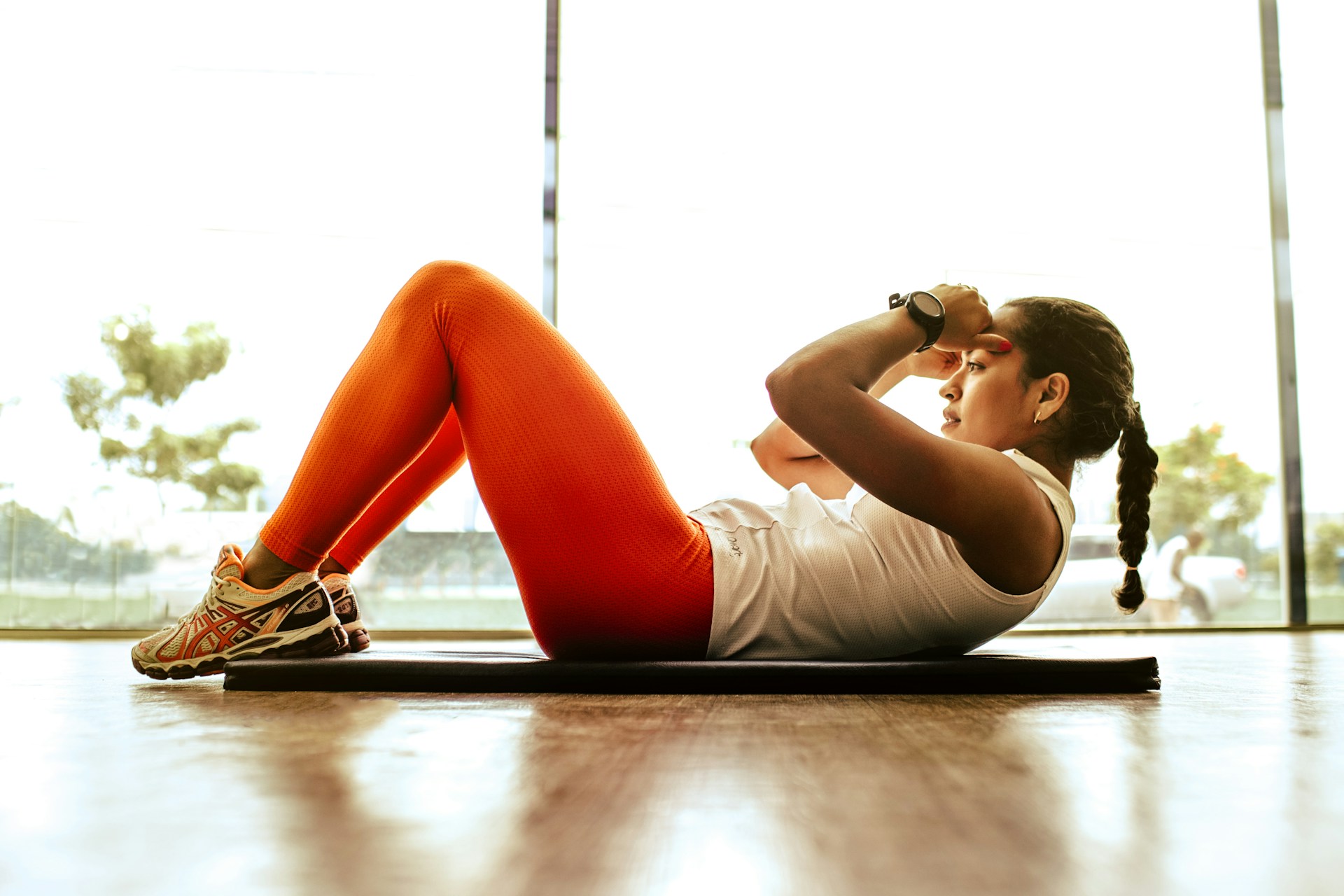
6. Banded Anti-Lateral Flexion Hold (Suitcase Carry Alternative)
Setup: Stand on one end of a long resistance band with your right foot. Hold the other end in your right hand at your side.
Execution:
- Stand tall, resisting the band pulling you to the right
- Hold for 20 seconds
- Switch sides and repeat
- Think "tall spine" — your body should look perfectly vertical even though the band is pulling you sideways
Reps: 20-second hold per side × 2
Why it works: This replicates the suitcase carry — one of the most functional core exercises — without needing heavy dumbbells or walking space. Your quadratus lumborum and obliques fire intensely to maintain lateral stability.
For this exercise, a single heavy fabric resistance band from Tribe Lifting works perfectly — loop it under your foot and hold the top.
Workout Summary
| Exercise | Reps | Rest |
|----------|------|------|
| Pallof Press | 10/side | 30 sec |
| Standing Chop (High to Low) | 12/side | 30 sec |
| Standing Lift (Low to High) | 12/side | 30 sec |
| Banded Dead Bug (Standing) | 8/leg | 30 sec |
| Standing Band Rotation | 15/side | 30 sec |
| Anti-Lateral Flexion Hold | 20 sec/side × 2 | 30 sec |
Total time: ~15 minutes for 2 rounds, ~22 minutes for 3 rounds.
Programming: How to Fit This Into Your Training
Option 1 — Standalone core day. Do this workout 2-3× per week on off days from your main training. It's low-impact enough that it won't affect recovery.
Option 2 — Warm-up. Pick 2-3 exercises from this workout and do 1 set each before your main lifts. Anti-rotation and anti-extension exercises are excellent for activating your core before squats and deadlifts.
Option 3 — Finisher. Add 1-2 rounds after your main workout. This is especially effective after pull day workouts or lower body sessions where core stability is already taxed.
Progression: Making It Harder Over Time
Don't just add reps. Progress with these methods:
Common Mistakes to Avoid
Mistake 1: Using too light a band. If you can do all exercises without any sense of effort, the band is too light. You should feel your core actively working to resist the band's pull.
Mistake 2: Moving your hips during anti-rotation exercises. The Pallof press and standing dead bug only work if your hips stay square. If your hips rotate, you're using momentum instead of core strength.
Mistake 3: Holding your breath. Breathe. Exhale during the effort phase of each rep and inhale during the return. Holding your breath increases intra-abdominal pressure, which is useful during heavy barbell lifts but unnecessary and counterproductive for core isolation work.
Mistake 4: Rushing through reps. Core exercises need control. Each rep should take 3-4 seconds. If you're blasting through sets in 20 seconds, slow down.
The Science: Why Anti-Movement Training Builds a Stronger Core
Traditional core training (crunches, sit-ups, leg raises) trains the core as a prime mover — generating force through spinal flexion. But in real life, the core's most important job is being a force transmitter — transferring power between your upper and lower body while keeping the spine stable.
A 2019 systematic review in Sports Medicine analyzing 22 studies found that core stability training (anti-movement exercises) was superior to traditional core strength training for improving athletic performance measures including balance, agility, and functional movement scores (Prieske et al., 2019).
The National Institute of Health also notes that core stability — not core flexion strength — is the primary factor in preventing lower back pain, which affects an estimated 80% of adults at some point in their lives (NIH/NINDS, Low Back Pain Fact Sheet).
Standing band exercises train this stability function directly. Every exercise in this workout forces your core to resist an external force while maintaining neutral spine position — exactly what your core does during resistance band training, barbell lifts, sports, and daily activities.
FAQ
Can you build visible abs with resistance band core exercises?
Yes — but visible abs are primarily a function of body fat percentage, not exercise selection. Band core exercises build the underlying muscle, which becomes visible when body fat is low enough (typically below 15% for men, 22% for women). These exercises build the obliques and transverse abdominis particularly well, which creates the "frame" around the rectus abdominis.
How often should I do this standing core workout?
Two to three times per week is ideal. Core muscles recover faster than large muscle groups like legs or back, so they can handle higher frequency. Just avoid doing this workout the day before a heavy squat or deadlift session — your core needs to be fresh for heavy compound lifts.
Are standing core exercises better than planks?
They serve different purposes. Planks are an excellent anti-extension exercise, but they're static and limited in direction. Standing band exercises train anti-rotation, rotation, and anti-lateral flexion in addition to anti-extension — covering all four core functions. For a complete core program, include both.
What resistance band should I use for core exercises?
For anti-rotation exercises like the Pallof press, a medium-resistance tube band with handles works best. For standing exercises using a loop band, a medium fabric band provides good tension. A complete set with multiple resistance levels lets you match the right band to each exercise.
Can I do this workout if I have lower back pain?
Standing anti-movement exercises are among the safest core exercises for people with lower back issues because they avoid spinal flexion. However, if you have an active injury or diagnosed condition, consult your healthcare provider before starting any exercise program. Start with the lightest band available and focus on form over resistance.


